
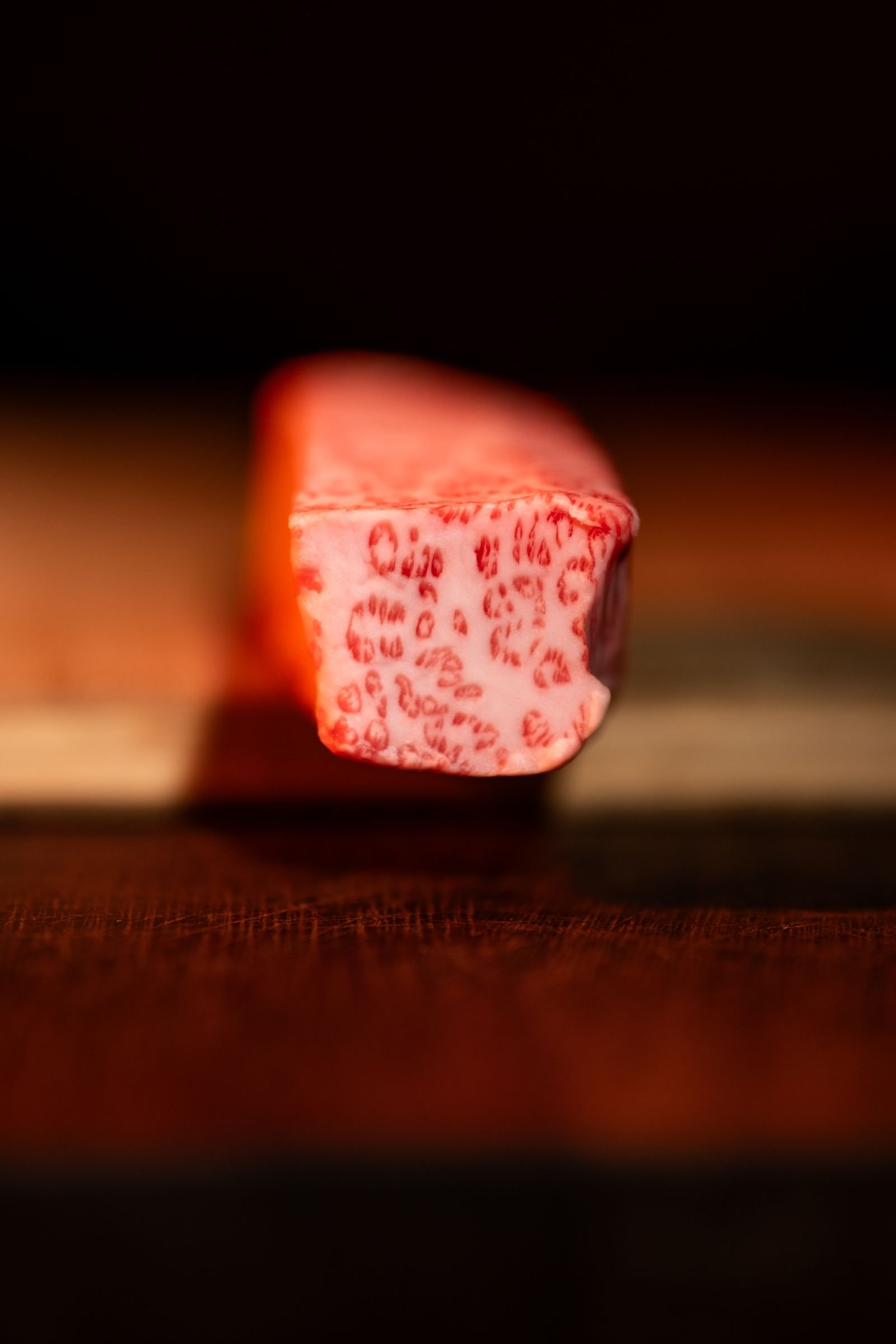
“A5” is the most famous label in the beef world, but it is also one of the most misunderstood. It does not simply mean “very marbled,” and two A5 steaks can look and taste quite different. This guide breaks down the Japanese grading system in plain English: what the letter means, what the number means, and why the separate 1–12 marbling score is the detail worth asking about before you buy.
Quick answer
- The letter (A, B or C) is the yield grade: how much usable meat came off the carcass.
- The number (1–5) is the quality grade, based on marbling, meat color, firmness and fat quality.
- BMS (1–12) is the marbling score. A5 covers BMS 8 to 12, so it is worth asking which one you are getting.
In this guide
Who grades Japanese beef
In Japan, beef carcasses are graded by the Japan Meat Grading Association (JMGA), using a standard system applied carcass by carcass. Every grade has two parts: a letter and a number. You will often see them written together, like A5, A4 or B3.
The letter: yield grade (A, B, C)
The letter is about quantity, not eating quality. It describes how much saleable meat the carcass produced compared with its total weight.
| Yield grade | Meaning |
|---|---|
| A | Above-standard yield: the most usable meat |
| B | Standard yield |
| C | Below-standard yield |
For you as a buyer, the letter matters much less than the number. A “B5” steak can eat almost exactly like an “A5” steak; the difference mostly matters to the farmer and the butcher.
The number: quality grade (1–5)
The number is where eating quality comes in. Graders score four separate traits:
- Marbling: the amount and fineness of fat inside the muscle (scored on the BMS scale below).
- Meat color and brightness: ideally a bright, cherry-red lean.
- Firmness and texture: fine grain and a firm, even structure.
- Fat color, luster and quality: white to creamy fat with a healthy sheen.
Important detail: the final number is not an average. The carcass gets the lowest of its four scores, so one weaker trait caps the whole grade. That is why a true 5 is hard to earn.
BMS: the 1–12 marbling score
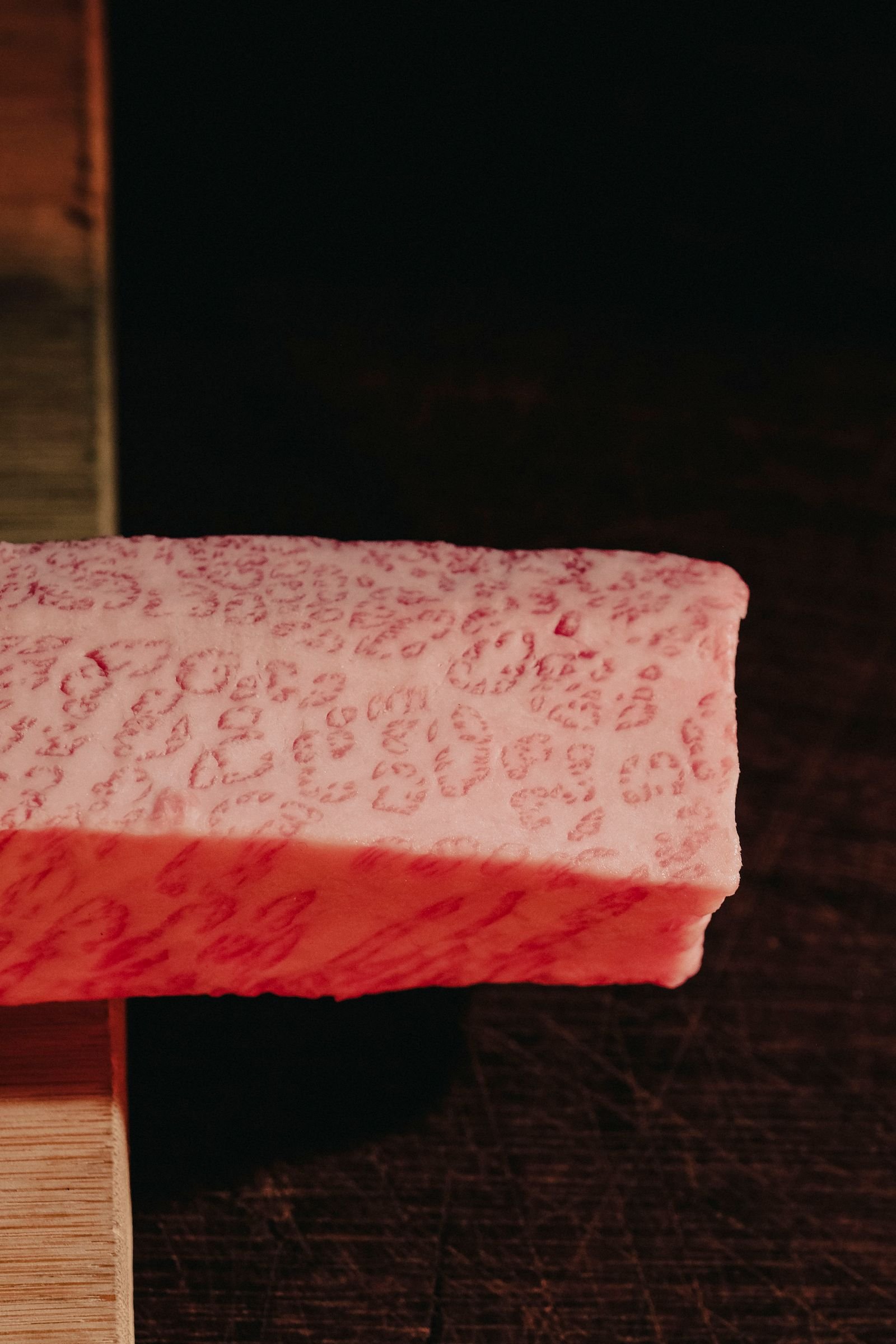
BMS stands for Beef Marbling Standard. Graders compare the cut surface of the rib-eye area with a set of reference standards and give it a score from 1 (very little marbling) to 12 (the most). The BMS then feeds into the quality number:
| BMS | Quality grade (marbling) | What it looks like |
|---|---|---|
| 1 | 1 | Very lean |
| 2 | 2 | Light marbling |
| 3–4 | 3 | Moderate marbling |
| 5–7 | 4 | Rich marbling, already above most supermarket steak |
| 8–12 | 5 | Dense, fine webbing of fat; BMS 10–12 can look almost pale |
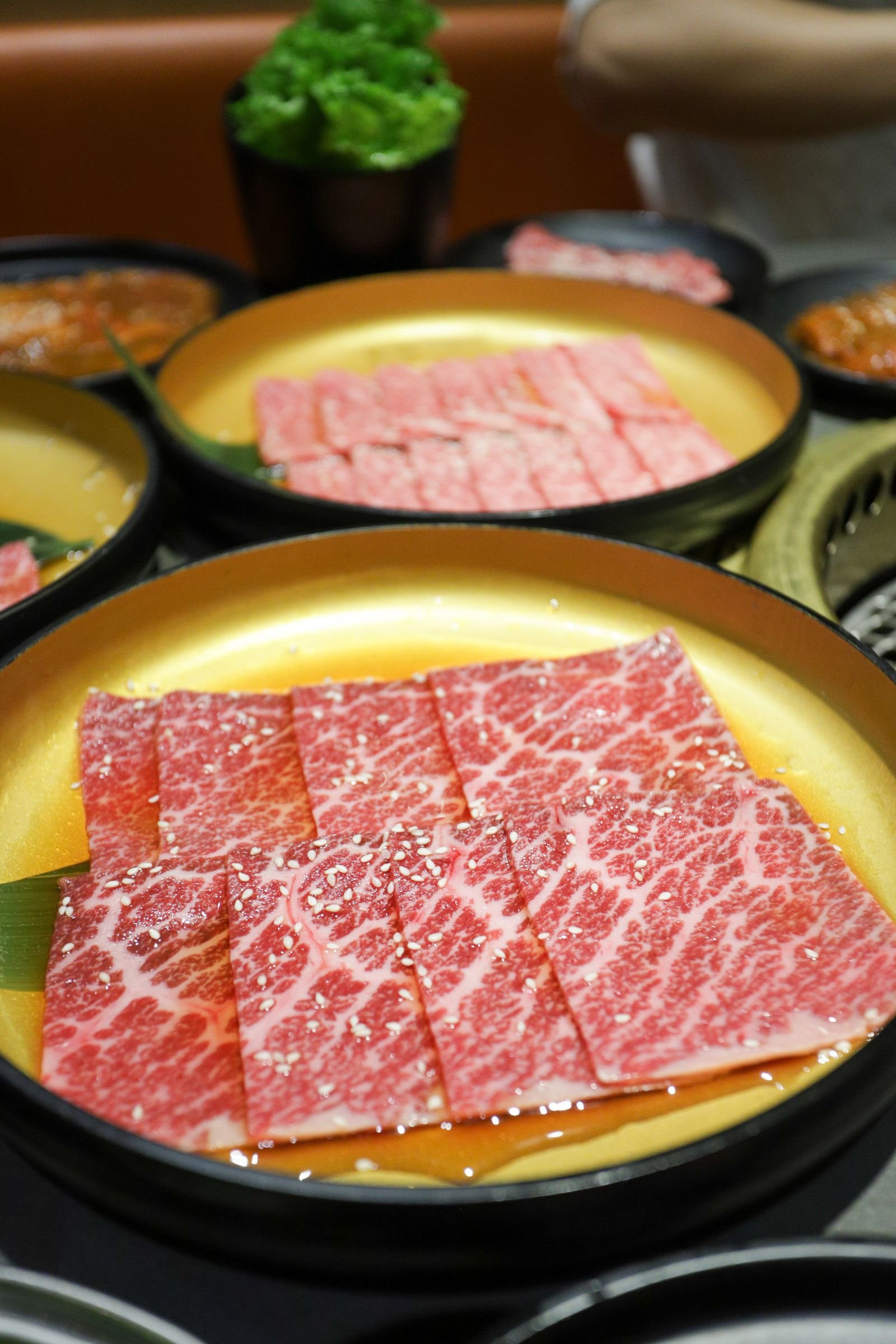
So “A5” can mean anything from BMS 8 to BMS 12. A BMS 8 ribeye and a BMS 12 ribeye are both A5, but the BMS 12 will be noticeably richer, and usually more expensive.
How it compares to USDA and Australian grades
Other countries use different systems, so the labels do not translate one-to-one:
- USDA (United States): beef is graded Prime, Choice, Select and so on, based mainly on marbling and maturity. Even USDA Prime typically sits well below A5 levels of marbling.
- AUS-MEAT (Australia): uses a marble score from 0 to 9, with “9+” for the very top. High-scoring Australian Wagyu can be excellent and is often cheaper than Japanese A5.
- American Wagyu: usually Wagyu crossed with Angus and graded on the USDA system. Read our A5 vs American Wagyu guide for the full comparison.
What this means when you buy
- Ask for the BMS. A good seller will tell you the exact score, not just “A5.”
- Look for paperwork. Genuine Japanese Wagyu can be traced back to the individual animal; reputable sellers can provide a certificate or ID number.
- Match the grade to the meal. BMS 8–9 is plenty rich for most people. Save BMS 11–12 for a small tasting portion.
- Do not overpay for the letter. A4 or B5 can be a great value if the price is right.
Once you have the right steak, the next step is cooking it well. Our step-by-step cooking guide walks you through it.
FAQ
Is A5 the highest grade of Wagyu?
Yes. A5 is the top combination in the Japanese system: the best yield grade (A) and the best quality grade (5). Within A5, the BMS score (8 to 12) tells you how rich it is.
What BMS should I buy for my first A5?
BMS 8 to 10 is a great starting point. It delivers the famous buttery texture without being overwhelmingly rich, and it usually costs less than BMS 11–12.
Is A4 Wagyu worth buying?
Often, yes. A4 still means BMS 5–7, which is heavily marbled by any standard and easier to enjoy in a slightly larger portion.
Does the letter A, B or C affect taste?
Not much. The letter describes how much usable meat the carcass yielded. Eating quality comes from the number and the BMS.
Keep reading
More Wagyu guides
How Much Does Wagyu Cost? A Price Guide
Typical prices for A5, Australian and American Wagyu, and how to save.
A5 Japanese vs American Wagyu: What Is the Difference?
How Japanese Wagyu is graded, what BMS means, and which one to buy.
Leave a Reply